


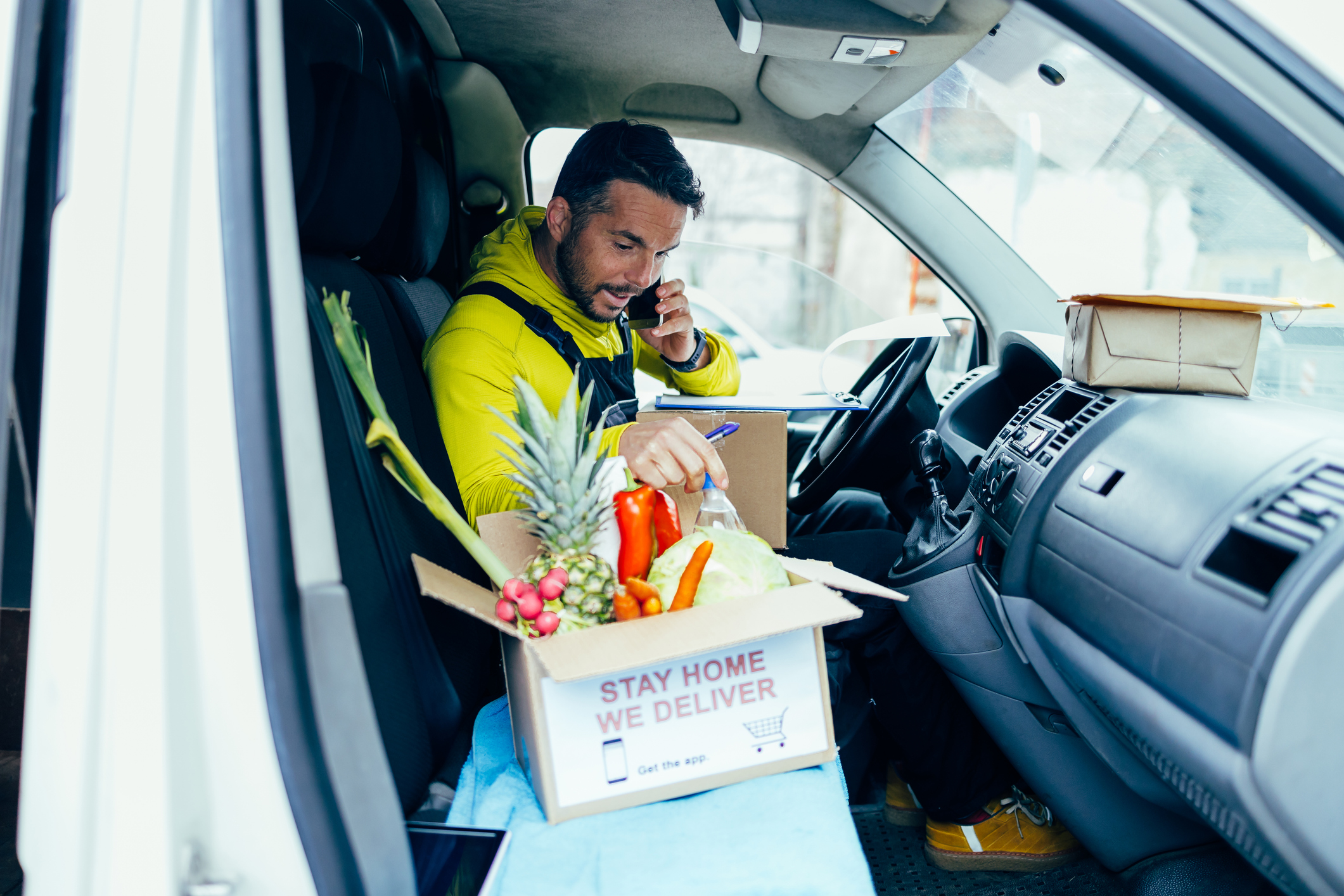
Food delivery apps are life-savers to many busy people and families. Ordering takeout has become very convenient through DoorDash, Uber Eats, or Grubhub, etc. All it takes is a few phone taps, and your food arrives within an hour. However, food delivery crashes are becoming more common as food delivery demands increase. As mentioned in the previous post, food delivery drivers are under pressure to work quickly while navigating traffic, food orders, and real-time distractions. Everyone on the road is at risk. Hence, if the unfortunate happens, who should be held liable for food delivery accidents?
Driver Liability
Here’s how the food delivery driver can be personally liable for the injuries:
- speeding
- distracted driving
- unsafe lane change
- running a red light
If the driver caused the wreck by doing any of the above-mentioned violations, then you can pursue the claim through his auto insurance. Arizona requires drivers to carry liability coverage, and the minimum limits depend on when the policy was issued/renewed. According to A.R.S. § 28-4009:
(a) For a policy that is issued or renewed on or before June 30, 2020 or for a policy that is issued to a person that has a valid certificate of self-insurance or partial self-insurance pursuant to section 28-4007:
(i) $15,000 because of bodily injury to or death of one person in any one accident.
(ii) Subject to the limit for one person, $30,000 because of bodily injury to or death of two or more persons in any one accident.
(iii) $10,000 because of injury to or destruction of property of others in any one accident.
(b) For a policy that is issued or renewed beginning on July 1, 2020, except for a policy that is issued to a person that has a valid certificate of self-insurance or partial self-insurance pursuant to section 28-4007:
(i) $25,000 because of bodily injury to or death of one person in any one accident.
(ii) Subject to the limit for one person, $50,000 because of bodily injury to or death of two or more persons in any one accident.
(iii) $15,000 because of injury to or destruction of property of others in any one accident.
Food Delivery Company/App Liability
Drivers are usually the ones liable in food delivery accidents. However, companies are not automatically absolved of liabilities. There is a legal concept called vicarious liability, which makes a business entity responsible for its driver’s negligence. This concept is under the doctrine of respondeat superior. It holds an employer or principal legally responsible for the wrongful acts of an employee or agent, if such acts occur within the scope of the employment or agency. Arizona courts use these legal routes when determining joint liability.
The common issue is that app-based delivery drivers are often considered as independent contractors. companies often argue that they do not “control” the driver enough to be establish the employer-employee relationship between the parties involved. Arizona cases discuss “scope of employment,” and the employer’s right to control the activity of their workers, when courts analyze vicarious liability questions.
If the food delivery driver is truly an employee doing job duties when the crash happened, the food delivery company/app may be liable. On the other hand, if the driver is legally an independent contractor, the company may argue that they are not responsible for the driver’s mistakes. In this case, check out the insurance coverage tied to the trip plus the driver’s own policy.
Commercial Liability
Even when the company argues “not our driver,” there may still be commercial liability coverage tied to the driver’s app status. The details would depend on the app status of the driver. He may be waiting for an order, or be actively on a delivery.
DoorDash maintains third-party auto liability insurance for Dashers involved in accidents while in the “Delivery Available” or “Delivery Service” period. DoorDash further states that its commercial auto insurance policy can cover up to $1,000,000 in bodily injury. This includes property damage to third parties. Coverage may vary depending on local insurance policies.
On the other hand, Uber says that if you were online and available for a trip at the time of the accident, Uber maintains insurance on the driver’s behalf. Amounts range from $50,000 per person / $100,000 per accident for injuries and $25,000 property damage, as shown on Uber’s insurance page.
Simply put, the same driver can have different coverage depending on their status at the time of impact:
- off the app
- logged in and waiting
- on an active delivery
That app status helps determine whether you may use a personal auto insurance, a commercial liability coverage, or both.
Comparative Fault
In some cases, more than one person may be liable in food delivery accidents. Arizona follows pure comparative negligence. This system reduces your claim for compensation based upon your share of fault. However, this does not automatically bar you simple because you were partly at fault.
For example, the delivery driver was speeding, but you also changed lanes without enough space. A jury could assign percentages of fault. As a result, your recovery can shrink based on your percentage. Your case won’t be wiped out as long as you’re not the only one at fault.
Therefore, if you want clear proof of liability, gather evidence right away. Obtain a police report, take photos, and if allowed, screenshot the food driver’s app. Get the order details from the receipt, which may show active delivery. Preserving evidence will help you identify which type of insurance coverage applies to your accident later on.